Why Sending 30 Resumes Is Lazy Hiring (And Why 3–5 Is the Future)
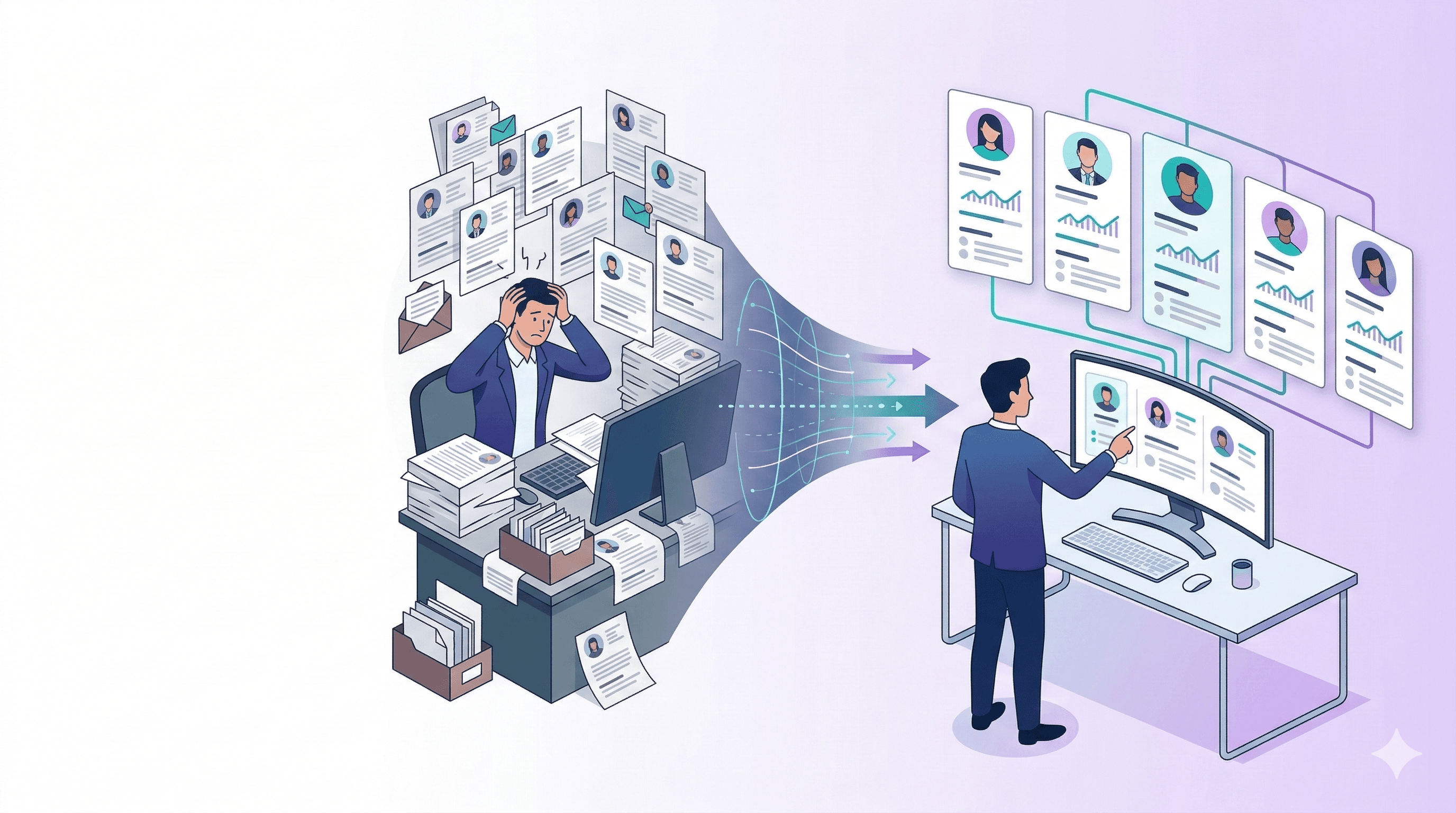
For years, resume volume has been mistaken for effort. If a recruiter sent 20 or 30 profiles for a single role, it was seen as being proactive. Thorough. Helpful. In reality, it often signals something else entirely: Lack of clarity. In today’s hiring environment, sending 30 resumes doesn’t make hiring easier. It makes it harder.
Contents
The Resume Overload Problem
Modern hiring teams are already overwhelmed.
Leaders juggle priorities. Managers have limited time. Teams need decisions, not distractions.
When dozens of resumes land in an inbox, three things happen. Decision-making slows down, accountability becomes unclear, and the risk of a mis-hire increases.
More options don’t create confidence. They create hesitation.
Why Volume Became the Default
Resume overload didn’t happen by accident.
Traditional staffing models were built around manual sourcing, limited screening tools, and the assumption that “more choice is better.”
In a pre-AI world, sending more resumes felt like adding value.
But the hiring landscape has changed.
Talent pools are larger. Technology is faster. Expectations are higher.
Yet many staffing practices haven’t evolved with them.
Why Sending 30 Resumes Is Lazy Hiring
It may sound harsh, but here’s the truth.
Sending 30 resumes often means the real work hasn’t been done.
It usually indicates weak role understanding, minimal screening, over-reliance on keyword matching, and passing decision fatigue to the client.
Instead of guiding the hiring process, volume pushes responsibility downstream.
That’s not efficiency. That’s avoidance.
What Hiring Leaders Actually Need
Hiring managers don’t need more profiles.
They need context, comparison, clear reasoning, and confidence in recommendations.
They want to know why a candidate fits, not just that they applied.
This is where smaller, curated shortlists outperform large resume dumps every time.
Why 3–5 Candidates Is the Sweet Spot
The most effective hiring decisions happen when choice is focused, not excessive.
A shortlist of 3–5 candidates works because each profile is evaluated deeply, differences between candidates are clearer, interviews are intentional, and decisions are made faster with confidence.
This isn’t about limiting options. It’s about elevating quality.
How AI Makes This Possible Today
In the past, narrowing down to 3–5 candidates required time-intensive manual effort.
Today, AI changes that equation.
Used correctly, AI can screen thousands of profiles quickly, identify skill and experience patterns, eliminate early-stage noise, and highlight role-relevant candidates.
This allows recruiters to spend their time where it matters most. Judgment, context, and evaluation.
Where Humans Still Matter Most
AI can narrow the field.
It cannot assess cultural alignment, understand motivation and intent, evaluate communication and adaptability, or take responsibility for hiring decisions.
That’s where experienced human recruiters add irreplaceable value.
The strongest hiring outcomes come from AI-assisted screening paired with human-led judgment.
The Shift from Quantity to Clarity
The future of staffing isn’t about proving effort through volume.
It’s about delivering clarity through structure.
Hiring teams that succeed tomorrow will work with partners who reduce noise early, present fewer, better candidates, explain why each candidate belongs, and stand behind their recommendations.
That’s how trust is built.
What the Future of Hiring Looks Like
The next generation of staffing will be defined by smaller, smarter shortlists, faster, clearer decisions, better candidate experiences, and higher retention and performance.
Not louder processes. Not longer lists. Just better outcomes.
The Bottom Line
Sending 30 resumes isn’t thorough hiring. It’s lazy hiring.
The future belongs to organizations that value precision over volume, judgment over noise, and clarity over confusion.
AI screens. Humans decide.
That’s how hiring moves forward.
Staffing. Rebuilt.
Frequently Asked Questions
Ideally, 3–5 well-screened, interview-ready candidates.
No. High volume often slows decisions and increases the risk of poor hiring outcomes.
AI can screen large candidate pools quickly, allowing recruiters to focus on evaluation and fit rather than manual filtering.