AI in Hiring: What’s Real, What’s Hype, and What Your Competitors Already Know
Every week, a new AI recruiting tool claims it can eliminate bias, predict cultural fit with near-perfect accuracy, and cut hiring time in half. There is a lot of noise in the market right now. But beneath all of that, something real is taking shape, and the organisations that are paying attention are already moving ahead. In 2026, AI in recruitment is no longer an experiment. It is part of day-to-day hiring. The real question is not whether you should use it, but where it actually adds value, and just as importantly, where it does not.
Contents
Where AI Is Actually Delivering Results
The biggest gains from AI in recruitment are showing up in tasks that involve speed and volume. These are the parts of hiring that traditionally take the most time but add the least human value.
Screening automation
AI-based CV parsing combined with skills matching can reduce initial screening time by up to 70 percent. This is especially useful for high-volume roles in operations and support functions.
Job description optimisation
Tools that identify biased language and highlight salary misalignment in real time are helping companies attract more relevant candidates. In many cases, this leads to a 25 to 35 percent increase in qualified applicants.
Interview support
AI-generated interview guides built around competencies can bring more consistency to interviews. When used as prompts rather than scripts, they help reduce interviewer bias and keep conversations focused.
Where AI Still Falls Short
There is a part of the story that most tools do not highlight clearly. AI struggles with the factors that actually determine whether a hire succeeds.
Evaluating leadership presence, understanding a candidate’s motivation, conducting detailed reference checks, and assessing cultural alignment are still deeply human skills.
A model may be able to predict how long someone might stay in a role based on past data. What it cannot do is judge whether that person can earn trust in a difficult environment, handle pressure during a tough quarter, or rebuild confidence within a team.
Those decisions require context, experience, and judgment. They cannot be automated.
The TalentiFi-X Approach: Human Led, AI Assisted
This is exactly where our approach comes in.
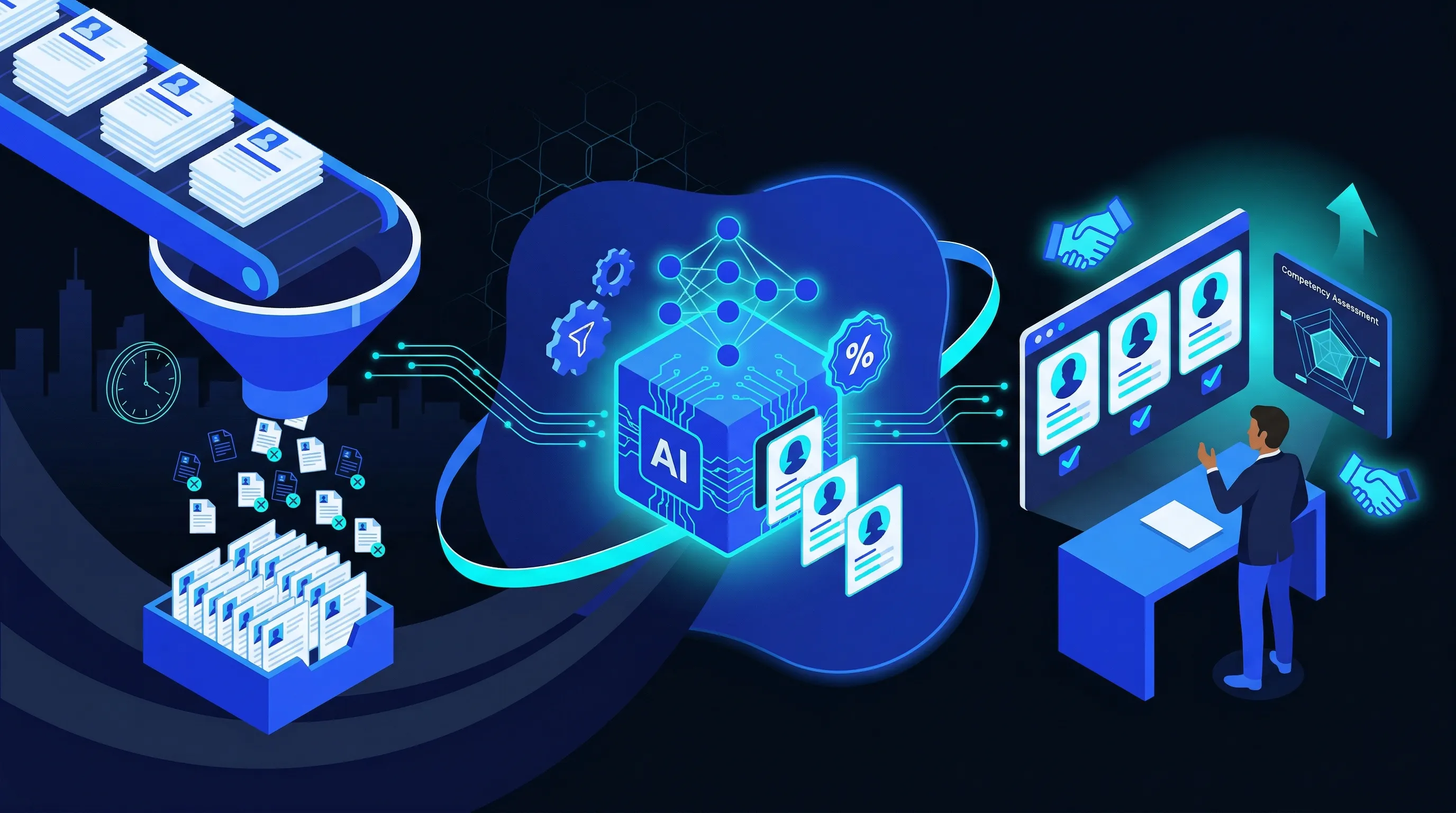
We use AI to move faster and remove noise at the top of the hiring funnel. It helps us screen efficiently, improve job descriptions, and structure interview frameworks.
But the actual decision-making stays human. The insight, the judgment, and the accountability sit with our team and with our clients.
This is not about philosophy. It is about outcomes.
The companies that consistently hire well are not replacing humans with AI. They are using AI to reach better shortlists faster, and then applying human attention where it matters most.
What This Means for Your Hiring Team
Start by identifying where your team spends the most time in the hiring process. Those are your best opportunities for AI support.
Review your job descriptions using AI tools. Even small improvements in language can significantly increase the quality of applicants.
Invest in structured interview training. AI-generated guides are helpful, but their effectiveness depends on how well your interviewers use them.
Do not automate reference checks or final evaluations. This is where human judgment delivers the most value.
Want to Explore AI-Assisted Hiring for Your Team?
You can book a free 30-minute session with the TalentiFi-X team. We will help you understand where AI can genuinely improve your hiring process and where it should not be used.
Frequently Asked Questions
AI is primarily used for screening resumes, optimizing job descriptions, and supporting interview processes to improve efficiency and scale.
No, AI cannot replace human judgment, especially in areas like cultural fit, leadership evaluation, and final hiring decisions.
The biggest benefits include faster screening, improved candidate matching, reduced bias in job descriptions, and increased efficiency in high-volume hiring.
Companies should avoid relying on AI for final-stage evaluations, reference checks, and assessing soft skills or leadership qualities, where human insight is critical.